
Transforming food systems to support climate resilience, reduced emissions, and accessible and nutritious food.
Food systems are vulnerable to climate change and are major contributors of greenhouse gases and environmental degradation. At the same time, food insecurity remains stubbornly high and unhealthy diets are prevalent in many places around the world, creating inequities and vulnerabilities.
The Food for Humanity Action Collaborative aims to:
- Educate leaders about the complexities of the food system and prepare them for careers in the sector.
- Investigate and analyze how food systems can transition towards sustainable pathways and trade offs between human health, environment and climate, and ecosystem services in food systems.
- Work with partners to co-design and -develop solution pathways towards climate-friendly, equitable, and nutritious food systems at local to global scales, prioritizing the most vulnerable and marginalized.
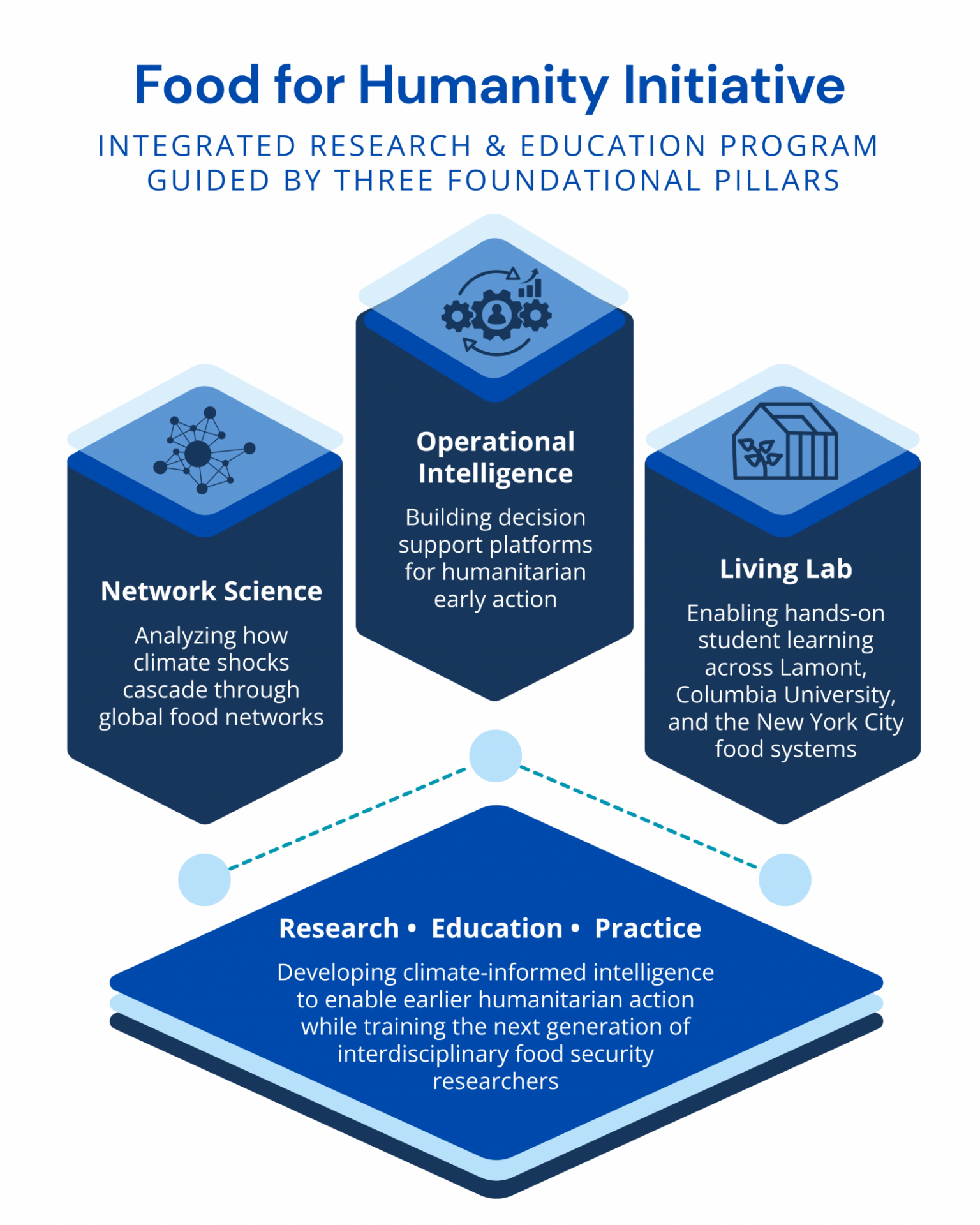
Our Three-Pillar Approach
To build momentum and demonstrate impact, F4H is launching with three foundational pillars that leverage Columbia Climate School’s unique strengths in climate science, complex systems analysis, and field research. This focused approach reflects strategic realism—concentrating initial efforts where we create genuine comparative advantage while positioning for expanded initiatives as partnerships and funding develop.
updated 2026 February